Activity
ScenArchitecture
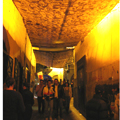
"Every performance meets its own space and needs its own place”.
Peter Brook
ScenArchitecture is a neologism invented by Andrea Moneta to redefine the
relationship between the disciplines of architecture and set design,
that have always dealt with the management of the space, real and
virtual.
The aim is to make reacting the methodology of architecture with the
vision of set design linked to poetic sensitivity of theater; this
allows to go beyond the limits of both disciplines going inside little
explored territories, operation that allows to earn new lifeblood in a
time where the two disciplines are lossing their cultural identity.
The interests, particularly economic, today prevent Art of architecture
to build an identity; at the same time, the developing of the
communicative methods and the digital revolution, are changing the
field of influence also of set design.
Architecture and Set design are now contaminated between them to point
that is no longer easy to distinguish one from another, for this reason
was born the term of Scenarchitecture.
The design of scenic spaces in modern theater becomes part of a research path that, from the concept of "scenic place" of classical theater, reaches the "theater outside the theater" concept for which any significant architecture is a place for theater, and thus by extension, the city can be "a place for theater."
Site-specific theatre performances to name a few: Biennial of Design in Rome, WAM – Web Art mouseum, performance "Labirinti contemporanei” and “Mandala architettonico” (13°, and 14° Urban theatre festivals in Rome), multidimensional performance “@nts”, performance “Euridice” (in collaboration with the Universidad Europea of Madrid-Spain), the "Live city" performances at the "Young people's cultures Festival" in Salerno, performance “Tramandala” for the Teatri di Vetro 3 Festival in Rome, the "Science's Week" and "European researchers' Night 2009” in Frascati, the performance of guerrilla theatre "Not a dream" at Valle Giulia and "Doctors without barriers" in Ciampino (Rome).
Go to the pages of Scenarchitecture
Nottingham Trent University
 As Senior Lecturer in Theatre
Design at the Nottingham Trent University School of Art
and Design, besides an academic role in Theatre Design, set and costume
design, design for performance for both speculative and realised design
contexts, he is teaching Visual Communication, digital design media, and is video maker for Theatre Design project video.
As Senior Lecturer in Theatre
Design at the Nottingham Trent University School of Art
and Design, besides an academic role in Theatre Design, set and costume
design, design for performance for both speculative and realised design
contexts, he is teaching Visual Communication, digital design media, and is video maker for Theatre Design project video.
Go to:Theatre Design @ Trent University
Smart Jokes
 Co-founder
of Smart Jokes, a Rome based communication company focused on ethic and
unconventional communication, has realised urban performances,
site-specific theatre performances and installations for (to name a
few): Save
the Children, WWF Italia, European Commission, Focus Storia magazine,
Comune
di Roma and Comune di Ciampino (Rm).
Co-founder
of Smart Jokes, a Rome based communication company focused on ethic and
unconventional communication, has realised urban performances,
site-specific theatre performances and installations for (to name a
few): Save
the Children, WWF Italia, European Commission, Focus Storia magazine,
Comune
di Roma and Comune di Ciampino (Rm).
Smart Jokes was built
for organizations, companies, associations that operate in a ethic,
biological, ecologic and sustainable way; our works are dedicated to
those who believe and pursue value projects for a sustainable society
and a new equal and fair market.
Smart means be creative in a ethic sense, so to offer a communication
of quality through the performative arts.
Go to:Smart Jokes
Architecture
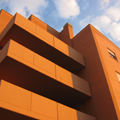 As
an architect we remember as a few: Project of the new Municipal
Building of the town of Ariccia (Rome), the restructuring of the
Pontifical Spanish College in Rome, the consolidation of the complex of
S. Francesco a Ripa and of the church of S. M. del Pianto in Rome, the
construction of five residential buildings in the complex of Ponte di
Nona in Rome, the allotment "La Macchia" in Trevignano Romano
(Rome), the project for the new headquarters of ASI in Frosinone.
As
an architect we remember as a few: Project of the new Municipal
Building of the town of Ariccia (Rome), the restructuring of the
Pontifical Spanish College in Rome, the consolidation of the complex of
S. Francesco a Ripa and of the church of S. M. del Pianto in Rome, the
construction of five residential buildings in the complex of Ponte di
Nona in Rome, the allotment "La Macchia" in Trevignano Romano
(Rome), the project for the new headquarters of ASI in Frosinone.
He participated to numerous national and international competitions of
architecture, to name a few: international competition for the Library
of Alexandria of Egypt (1989), the Acropoli's museum of Athens (1990),
the Congress Centre Italy-Eur (1998), the City of the School of Sarno
(1999), Transformation of the area of S. Lorenzo in Rome (2000), New
Masterplan of Crotone (2000, project awarded), competition Rione
Rinascimento in Rome (2002, special mention), the Archaeological Park
in Cerveteri (2003), Sustainable Design in Centocelle (2004, first
prize), international competition: “Invention Architecturale et
Patrimoine” promoted by: Association des Centres culturels de
Rencontre, Avignon (2008, winning project and rewarded by the
french Minister of Culture).
Founder member of Archabout -
"European
mediterranean laboratory of studies and production transnational and
transdisciplinary" an italian association that deals with
cultural production, research and training in different fields of
artistic culture contemporary, in particular: architecture, theatre and
visual arts
Go to the pages of Architecture
University of Rome "La Sapienza"
 From
2005 to 2012 is adjunct professor of Scenografia
(set design) at the Faculty of Architecture Valle Giulia of the
University of Rome "La Sapienza". Alongside didactic activities is the
research in the field of performing arts and
Scenarchitecture, with more than 40 degree projects in Set
Design at the Faculty of Architecture “Valle Giulia”, the Faculty of
Architecture “Ludovico Quaroni” of University of Rome "La Sapienza" and
the Faculty of Architecture of the University of RomaTre. The Course of
Scenografia holds every year more than 80 students not only Italian,
but also foreigners from across Europe through the Erasmus
programme.
From
2005 to 2012 is adjunct professor of Scenografia
(set design) at the Faculty of Architecture Valle Giulia of the
University of Rome "La Sapienza". Alongside didactic activities is the
research in the field of performing arts and
Scenarchitecture, with more than 40 degree projects in Set
Design at the Faculty of Architecture “Valle Giulia”, the Faculty of
Architecture “Ludovico Quaroni” of University of Rome "La Sapienza" and
the Faculty of Architecture of the University of RomaTre. The Course of
Scenografia holds every year more than 80 students not only Italian,
but also foreigners from across Europe through the Erasmus
programme.
Go to video-interview of the students: "Tell about the Course"
Go to the pages of the Corso di Scenografia
 From
1997 to 2005 is assistant to the course of PW4 architectural
design held by Prof. Gianfranco Moneta at the Faculty of Architecture
Valle Giulia of the University of Rome "La Sapienza". In these years
develops research activities in the field of
Architecture through more than 50 degree projects in architectural
design. The innovative methodology and the related architectural
designs are collected in a publication, "Logic and complexity of
Architecture", and exposed in exhibitions in Berlin, Weimar, Rome,
Città della Pieve. The research develops later towards generative
software for the architecture in collaboration with Prof. Makoto
Sei Watanabe (Japan) and in the field of virtual
architecture on Second
Life, in collaboration with Temple University (USA).
From
1997 to 2005 is assistant to the course of PW4 architectural
design held by Prof. Gianfranco Moneta at the Faculty of Architecture
Valle Giulia of the University of Rome "La Sapienza". In these years
develops research activities in the field of
Architecture through more than 50 degree projects in architectural
design. The innovative methodology and the related architectural
designs are collected in a publication, "Logic and complexity of
Architecture", and exposed in exhibitions in Berlin, Weimar, Rome,
Città della Pieve. The research develops later towards generative
software for the architecture in collaboration with Prof. Makoto
Sei Watanabe (Japan) and in the field of virtual
architecture on Second
Life, in collaboration with Temple University (USA).
Go to: PW4 projects portfolio
Master in Scenography
 MASTER IN URBAN, THEATRE, DIGITAL
SCENOGRAPHY University of Rome "La Sapienza"
MASTER IN URBAN, THEATRE, DIGITAL
SCENOGRAPHY University of Rome "La Sapienza"
The idea of Theatre becomes something else age after age. It is very
ancient, yet always new. When the idea of theather changes, the space
of theatre changes with her. Sometimes this space is a closed area,
sometimes a little, precious space like a jewerly box, sometimes a
square in the slums. Yet theatre is more than this. Its real
communication skill finds the highest value in the relationship between
space, actors and spectators. Scenography becomes an instrument to
modify reality and to reveal hidden vocations.
The
Universitary Master in “Urban, Theatre and Digital Scenography” range
from the bases of traditional Scenography to the modern ways to
interpret and design urban locations. Teachers are pros that work in
areas of theatre, virtual and motion film. The Master includes “on
site” experiences from urban locations to real theatres. Through a
continuos re-elaboration process, students will be able to build
performative experiences in the city, in theatres and in virtual
spaces, putting together data, memories, ideas coming from the
relationship with territory.
Students could define his/her ability to analize the urban reality and,
at the same time, could improve expertise and knowledge of stage
design: building a storyboard, use of lighthing, set construction.
Joining several concepts (local memories of the city, personal
experiences and knowledges, etc.) they’ll be able to design and create
theatrical spaces in a strong union between architecture and theatre.
Go to the pages of: Master in Scenography